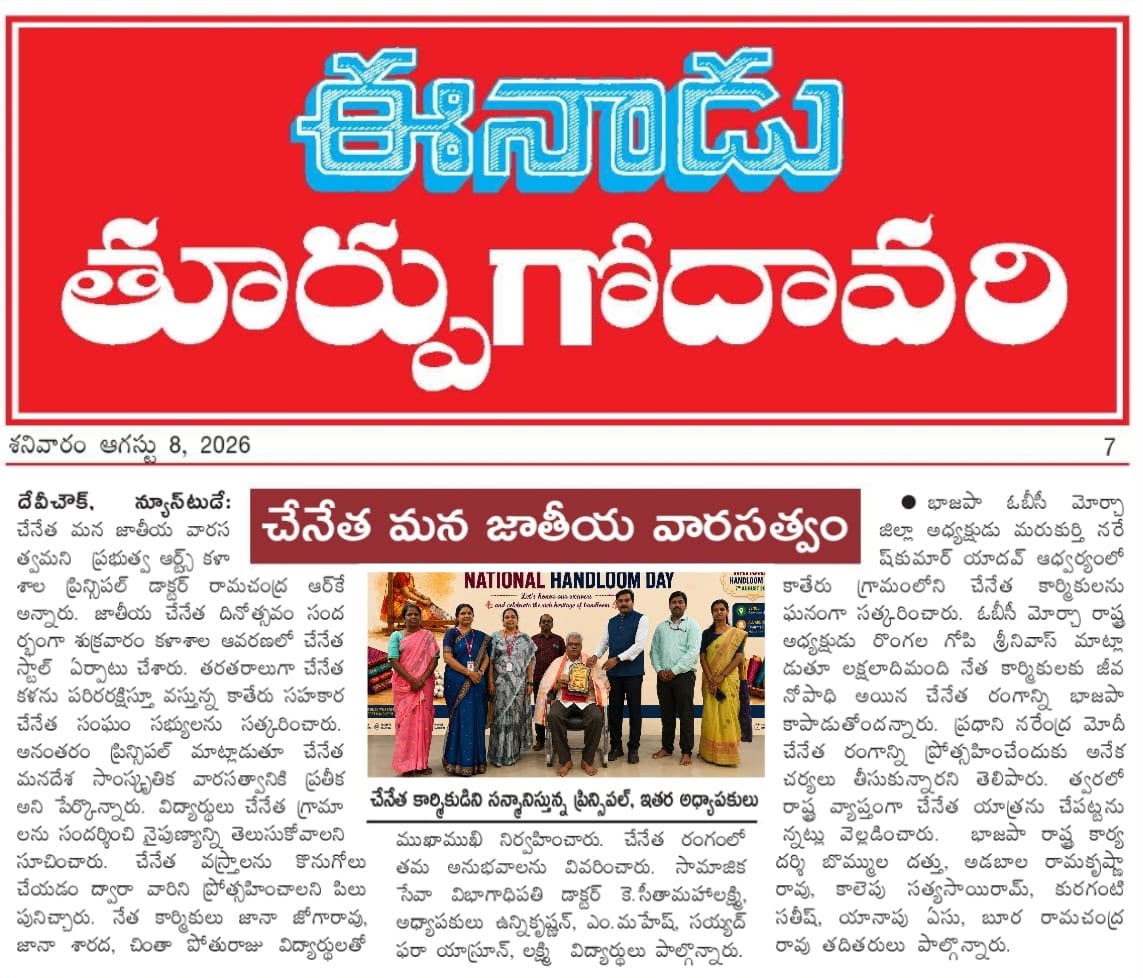
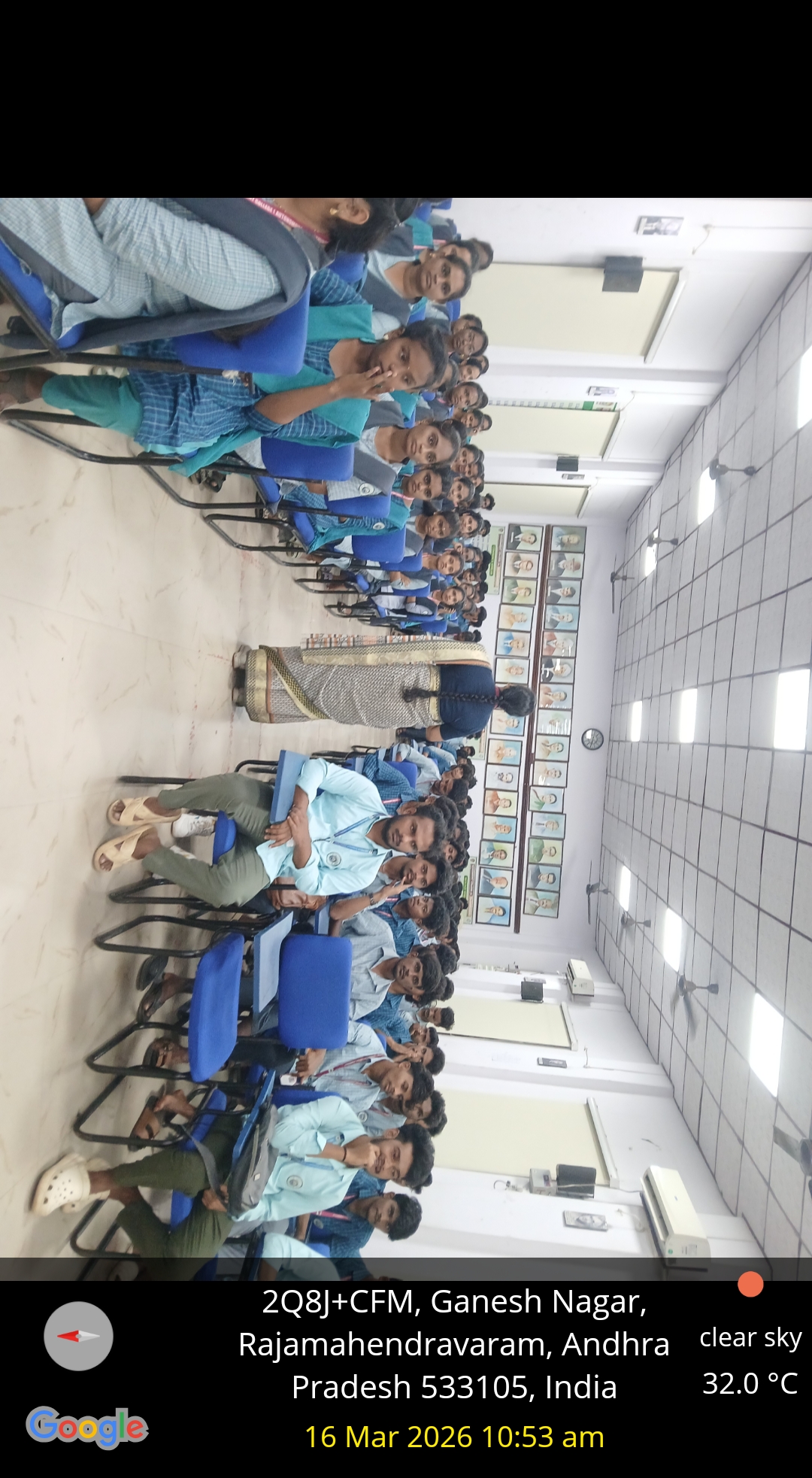
The Department of Social Work, Government College (Autonomous), Rajamahendravaram, celebrated National Handloom Day on 7 August 2026 to create awareness among students about India’s rich handloom heritage and to recognise the contribution of handloom artisans and weaving communities. The programme encouraged students, faculty and staff to appreciate and support indigenous handloom products and local weavers.
The programme was graced by Principal Dr. Ramachandra R.K. as the Chief Guest. In his address, he emphasised the need to protect and preserve handloom as a national heritage and encouraged students to learn about traditional handloom practices by visiting weaving communities and villages. He urged everyone to support handloom artisans by purchasing and promoting handloom products. Sharing his personal experience of operating a traditional handloom during his visit to the Trivandrum Handloom Society in Kerala, he highlighted the cultural value and craftsmanship associated with handloom weaving.
As part of the programme, local handloom artisans were felicitated in recognition of their valuable contribution to preserving the traditional weaving heritage. An interactive session was also organised with distinguished weavers from the Katheru Cooperative Society, a century-old weaving cooperative. Senior members Jana Joga Rao, Jana Sarada and Chinta Poturaju shared their experiences, explaining the weaving process, cultural significance of traditional textiles and the contemporary challenges faced by weaving communities. They also motivated students to promote indigenous handloom products as a means of preserving cultural heritage and supporting artisan livelihoods.
Organizer(s):
Dept. Social work
Outcome:
Created awareness among students about the cultural, economic and social significance of handloom traditions.
Developed appreciation for the skills, craftsmanship and livelihood of handloom artisans.
Provided students with direct interaction and experiential learning from practising weavers.
Encouraged students to support local weavers and promote indigenous handloom products.
Enhanced understanding of the challenges faced by traditional artisan and weaving communities.
Promoted the values of social responsibility, cultural preservation, sustainable consumption and community engagement.
Strengthened the connection between Social Work education and grassroots artisan communities.
Feedback:
The programme sensitised students to the importance of preserving India’s handloom heritage while promoting social responsibility and sustainable livelihood opportunities for traditional weaving communities.